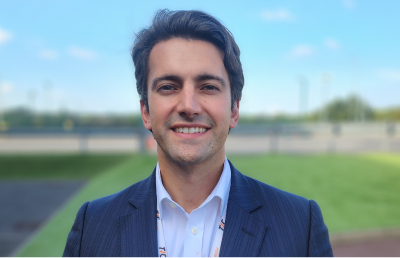
Dr. Christian Kleanthous is a qualified GP with expertise in sports medicine, trauma, orthopaedics, and MSK medicine. Holding a Neuroscience degree from UCL, he’s served as a team doctor across various sports, including FA league football and rugby, and has provided medical support at events like the Rio Olympics and London Marathon.
- Dr. Christian Kleanthous

- Dr. Christian Kleanthous

- Dr. Christian Kleanthous

- Dr. Christian Kleanthous



Disclaimer
This article is for informational purposes only and does not substitute professional medical advice. Please consult your doctor or a qualified healthcare provider before making any decisions about your health or starting any new treatments.Most of us take out health insurance in the same way we take out home insurance – hoping, quietly, that we'll never need to use it. The policy sits in a drawer, or more likely in an email folder that nobody opens, and we pay the monthly premium with the same resigned acceptance we reserve for utility bills. It's the sensible, grown-up thing to do. It's planning for the worst.
But there's something worth examining in that logic. Because often the moment when you actually need health insurance – when something has already gone wrong – is also the moment when its limitations become all-too apparent.
What Health Insurance Actually Covers
Private medical insurance is designed to pay for treatment after diagnosis. It is reactive by design, and that's not a criticism – that's what it's for. But the small print matters more than the headline price, and that headline price is rarely the one you end up paying.
Most policies begin with a moratorium – typically one to two years during which conditions you had before the policy started are excluded from cover. Under full medical underwriting, pre-existing conditions are excluded permanently. The six-week rule applies to many policies too: if the NHS can treat the condition within six weeks, your insurer won't pay out. And premiums rise – with age, with medical inflation, and with claims history. Make a claim and your renewal will reflect it. That's not a failing of any particular insurer; it's just how the product works.
Then there are the extras. Dental cover sounds reassuring until you discover your nearest participating dentist is 40 minutes away. Mental health support sounds comprehensive until you read the annual limit. Optical cover, physiotherapy, a 24-hour GP line – all of it inflates the premium, some of it gets used, much of it doesn't. You're paying for a package, and it’s one that was built for the average policyholder, not for you specifically.
None of this makes health insurance a bad product. For many people it's the right one. But it's worth being clear about what you're actually buying: cover for conditions that have already developed, within the terms of a policy that was written before you knew what you'd need it for.
The Gym Membership We Never Question
Most people in the UK who hold a gym membership pay around £48 a month for it, according to the Leisure DB State of the UK Fitness Industry Report 2025. That's more than £570 a year, paid in the reasonable belief that looking after yourself now is better than paying for problems later. We don't think of gym membership as insurance – but the logic is similar. We invest in our physical health prospectively, before we know what we'll need.
We don't blink at that figure. We don't ask for a list of conditions it covers. We join because we understand that not looking after our health has long-term implications.
TIC Health membership starts from £25 a month. The question the membership asks is a simple one: would you rather know what's happening inside your body, or wait until something makes itself known?
The Human Stakes of Not Knowing
More than 80% of cancer deaths in the UK can be attributed to cancer types for which no population screening programme currently exists, according to research published in the British Journal of Cancer drawing on NHS England data. Bowel, breast and cervical cancers have established screening programmes. Everything else relies on a symptom bringing you in.
The problem is that symptoms, by the time they appear, are often telling you something that was already true months or years earlier. Evidence shows that survival is higher the earlier the stage at which cancer is diagnosed – a principle NHS England has built its Long Term Plan around, with a stated ambition that 75% of cancers should be diagnosed at stage one or two by 2028. Rates of early diagnosis remained stubbornly flat at around 55% between 2013 and 2019 and have moved only incrementally since.
What imaging changes is the window. A CT lung cancer screening programme run by Royal Papworth Hospital NHS Foundation Trust between 2019 and 2024 found 7,193 lung cancers in high-risk individuals; 75.7% of those were found at stages one and two. Normally, without screening, 75% of lung cancers are found at stages three and four, when treatment is much less likely to be effective. Screening, as one of the programme's lead researchers put it, flipped the script.
These are rare events at an individual level – most people who present for a scan will receive reassuring results, and that outcome is itself valuable. But the direction of the evidence is consistent: finding something early changes what can be done about it in ways that finding it late simply cannot replicate.
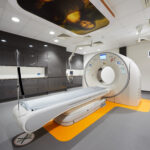
TIC Health members receive a thorough annual health check-up as part of their membership, and have same-day access to a full range of diagnostic scanning with results back within 24 hours.
The Anxiety Of Not Knowing
There's a version of the health anxiety argument that says: I'd rather not know. If something is wrong, knowing won't help – it will just give me more to worry about.
It's an understandable position, and it deserves an honest answer rather than a dismissal.
For people living with clinical health anxiety – a recognised condition in which ordinary physical sensations are persistently misread as signs of serious illness – more scanning is not always the answer, and a conversation with a GP is a better starting point.
But for most people, the anxiety is not clinical. It's the ordinary, rational worry that comes from noticing something that wasn't there before, or from a family history that sits at the back of the mind, or simply from getting older and becoming more aware of what the body is capable of surprising you with. For those people, the evidence points consistently in one direction: uncertainty sustains anxiety longer than results do, even difficult ones. It is the not knowing that tends to keep people awake at night. Getting an answer, even an answer that requires action, gives the worry somewhere to go.
Planning For Longevity, Not Just The Worst Case
Health insurance asks: what happens if something goes wrong?
Diagnostic scanning asks: is anything going wrong that I don't yet know about?
They're not the same question. Both have a place in a considered approach to your health. But only one of them gives you information you can act on before a condition has progressed to the point where treatment is the only option.
TIC Health's proposition holds that looking after your health now is the most rational investment in the life you want later. And that is not something born out of anxiety nor out of fear.
If you'd like to start finding out what's happening inside your body, we can see you today.