

Dr. Christian Kleanthous is a qualified GP with expertise in sports medicine, trauma, orthopaedics, and MSK medicine. Holding a Neuroscience degree from UCL, he’s served as a team doctor across various sports, including FA league football and rugby, and has provided medical support at events like the Rio Olympics and London Marathon.
- Dr. Christian Kleanthous
- Dr. Christian Kleanthous

- Dr. Christian Kleanthous

- Dr. Christian Kleanthous

- Dr. Christian Kleanthous



Disclaimer
This article is for informational purposes only and does not substitute professional medical advice. Please consult your doctor or a qualified healthcare provider before making any decisions about your health or starting any new treatments.If you've been referred for a CT scan or an MRI, the question asked is often the same: which one, and does it matter?
It matters, but not in the way the comparison usually suggests. CT scans and MRI scans aren't competing tools; they answer different questions, and the right one depends on what your doctor is looking for.
What's The Difference Between A CT Scan And An MRI Scan?
A CT uses X-Rays to build a detailed cross-sectional picture of the body. An MRI uses a powerful magnetic field and radio waves to do the same thing, with no radiation involved. Both produce cross-sectional images, but the underlying physics is different, and so is what the images show best.
A CT scan is quick, with most taking between 5 and 15 minutes, and is particularly good at seeing bone, bleeding and structures that contrast sharply with the surrounding tissue. An MRI takes longer, usually between 20 and 45 minutes, and gives a far more detailed picture of soft tissue – the brain, spinal cord, muscles, ligaments and organs.
Neither scan is objectively better than the other; they're built for different jobs.
How Does Each Scan Work?
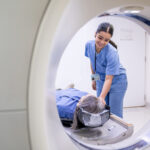
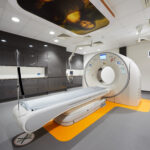
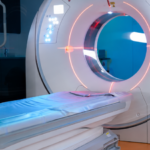
CT, short for computed tomography, takes a series of X-ray images from different angles and uses a computer to combine them into detailed cross-sectional slices of the body. CAT scan is the older name; the two terms mean the same thing. A CT scanner looks like a large ring, and you lie on a table that passes through it. The scan itself is quick and fairly quiet.
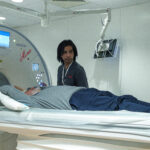
An MRI, short for magnetic resonance imaging, works on a different principle. You lie inside a large tube surrounded by a powerful magnet. The magnet aligns the water molecules in your body, and radio waves nudge them out of alignment. When the molecules settle back, they emit a signal that the scanner turns into an image. The process takes longer and the machine is louder – the noise comes from the coils inside the magnet vibrating as they switch on and off during the scan. You'll usually be offered headphones and music.
What Does Each One Look For Best?
CT scans are usually the first choice for bone, for detecting internal bleeding (especially in emergencies) and for examining the lungs and chest. They also suit kidney stones, some abdominal cancers and trauma cases where speed matters.
MRI scans come into their own with soft tissue. They are the standard choice for the brain and spinal cord, joints and tendons, muscle injuries and abdominal or pelvic conditions where fine detail matters. MRI is also preferred when avoiding radiation is important – for repeated scans during treatment, for example, or for scans involving children or pregnancy.
How long does each scan take?A CT scan is quick, with most taking between 5 and 15 minutes including setup. A chest or abdomen CT is often done in under 10. The speed is part of why CT is used in emergencies: it gives the clinical team a clear picture without delay.
An MRI takes longer, usually between 20 and 45 minutes, sometimes longer, depending on what's being imaged. Brain, spine or multi-region studies can run closer to an hour.
Safety: Radiation, Contrast And What To Expect
CT and MRI have different safety profiles, mostly because the underlying physics is different.
A CT scan uses a small dose of ionising radiation. For most people the dose is low and the diagnostic benefit outweighs the risk, but clinicians try to avoid unnecessary CT scans where possible, particularly in children and during pregnancy. An MRI involves no radiation at all: the magnetic field and radio waves are painless and carry no long-term exposure risk.
MRI has its own set of considerations. The magnetic field is powerful enough to affect anything metal in the body, so anyone with a pacemaker, certain implants, metal fragments or some types of aneurysm clip may not be able to have one. A short pre-scan questionnaire covers these questions.
Some scans – both CT and MRI – use a contrast agent to make particular tissues show up more clearly. Contrast is generally safe but can cause reactions in a small number of people, and the clinical team will ask about allergies and kidney function before using it.
Claustrophobia is more of a consideration with MRI than CT. A CT scan is open and quick, while an MRI involves lying inside the scanner for longer. For many people, the MRI isn't a problem. If you know a confined space would be hard for you, talk to the radiographer in advance – they'll walk you through what to expect, and some clinics offer open or wide-bore MRI as an alternative.
Cost: CT vs MRI in the UK
Both scans are available on the NHS without charge when clinically needed. Waiting times for non-urgent imaging have grown, and many people consider a private scan as a way to bring the date forward.
Privately, prices depend on the body part being imaged, the scanner used and whether contrast is needed. As a guide to the UK range, a private CT scan typically costs between £400 and £1,200, and a private MRI scan between £350 and £600. At TIC Health, the price includes the radiologist's report as well as the scan itself. If you're likely to need more than one scan over the year, TIC Health membership covers unlimited scans from £25 a month.
Which Scan Do You Need?
Start with the doctor making the referral. CT and MRI aren't interchangeable, and the clinician's choice depends on what they need to see. If your GP or consultant has suggested one over the other, there's almost always a specific clinical reason – a CT for a suspected fracture or for a clearer look at the chest; an MRI for joints, soft tissue or the brain and spine.
If no one has recommended a scan yet, that's the first step. At TIC Health, a pre-scan consultation with one of our medical practitioners will establish whether a scan is needed and, if so, which one.
If you've already been referred and you're weighing up a private scan to get it done sooner, CT is quicker on the day and MRI gives more soft-tissue detail. Costs vary by provider and body part, and most private clinics offer both.
It does matter which scan you end up having, but the decision usually isn't one you need to make on your own. It's a clinical call, and the best starting point is a conversation with a doctor who can tell you what the scan is actually looking for.
If you'd like to talk it through with a doctor, we can see you today.