

Dr. Christian Kleanthous is a qualified GP with expertise in sports medicine, trauma, orthopaedics, and MSK medicine. Holding a Neuroscience degree from UCL, he’s served as a team doctor across various sports, including FA league football and rugby, and has provided medical support at events like the Rio Olympics and London Marathon.
- Dr. Christian Kleanthous

- Dr. Christian Kleanthous

- Dr. Christian Kleanthous

- Dr. Christian Kleanthous

- Dr. Christian Kleanthous




Disclaimer
This article is for informational purposes only and does not substitute professional medical advice. Please consult your doctor or a qualified healthcare provider before making any decisions about your health or starting any new treatments.The market for preventative health scanning has grown quickly in the UK, and the language around it has grown with it. We see scans that map "millions of data points" or technology that reads your body "from the inside out." There's also the promise of appointments that deliver results before you leave. The proposition is compelling, and for many people it represents a genuinely new way of thinking about their health.
But not all scanning technology looks at the same things, and that's something the hard-sell rarely makes clear.
Sensor Technology And What It Can And Can't See
The newest generation of consumer health scans uses proprietary sensor arrays to build a picture of your cardiovascular health, your skin, and your metabolic markers. The promise is of some futuristic profiling that gives forensic detail of your entire body: an ECG reads your heart's electrical activity, arterial analysis assesses blood flow and circulation, high-resolution cameras map your skin and moles. The list is broad: blood drawn on-site and processed in minutes gives you cholesterol levels, long-term blood sugar and inflammation markers while body-composition technology measures visceral fat and body fat percentage without the need for a separate scan.
This is genuinely useful data. Cardiovascular disease and type-2 diabetes are among the most prevalent chronic conditions in the UK, and early indicators for both are detectable through non-invasive sensor testing of this kind. Mole mapping over time builds a record of change that a GP appointment every few years simply cannot replicate.
But there is a category of serious illness that sensor technology cannot detect, because it doesn't present at the surface and it doesn't reveal itself in blood markers until it has often been present for some time – tumours in solid organs, lesions in the liver, kidneys or pancreas, structural changes in the brain, nodules in the lungs, early-stage changes in the bowel, prostate, ovaries or uterus. These are conditions that require imaging that goes inside the body, and that means an MRI.
It is worth noting that new scanning concepts continue to emerge, some attracting significant investment and considerable attention. A recently announced ultrasonic technology, backed by tens of millions of dollars and promoted in some quarters as a potential rival to MRI, has generated genuine interest in the preventative health space. Clinicians have pointed out, however, that ultrasound cannot travel through bone or air, which places the brain, lungs, heart and bowel largely beyond its reach – precisely the areas where many serious conditions originate. Promising technology and proven diagnostic capability are not the same thing, and medicine has always sought published evidence before drawing that equivalence.
What An MRI Actually Does
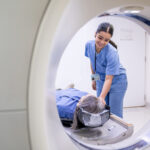
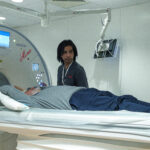
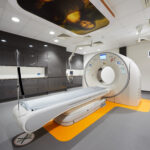
Magnetic resonance imaging uses magnetic fields and radio waves to produce detailed cross-sectional images of soft tissue throughout the body. Unlike sensor-based technology, it doesn't measure what's happening at the surface or infer what might be happening inside from cardiovascular or metabolic markers. It looks directly at the organs themselves – their structure, their composition, and any changes within them that might warrant a closer look.
A full body MRI at TIC Health covers the brain, neck, chest, abdomen and pelvis in a single appointment – the brain and its blood vessels, the major structures of the chest, and the abdominal organs including the liver, kidneys, pancreas and spleen, through to the pelvic organs and surrounding tissue. Images are reviewed by consultant radiologists, and results are back within 24 hours.
It is worth being clear about what a full body MRI doesn't replace. A colonoscopy gives a different and more detailed view of the bowel than MRI alone, and a mammogram remains the established route for breast screening. Where a targeted test is the better clinical answer, we'll say so. But for a broad, detailed first picture of what's happening inside the central areas of your body – in organs where serious conditions can be present long before symptoms appear – MRI is what clinical medicine actually uses.
The Question That Matters After The Scan
More than 80% of cancer deaths in the UK are attributable to types for which no population screening programme currently exists, according to research published in the British Journal of Cancer drawing on NHS England data. For most people, there is no automatic route to the kind of organ imaging that might find something early, and the only systematic way to close that gap is through private diagnostic imaging.
TIC Health's full body MRI is included in membership, and membership includes unlimited GP consultations – so a finding doesn't sit in isolation. Before the scan, you speak to one of our GPs. After the scan, they call you to talk through the results. If something needs a closer look, we arrange a dedicated scan of that area. If the results mean you need onward care, we handle the referral. The scan is where the process starts, not where it ends.
Conclusion: Shedding Light on Your Health
Digital X-rays are a remarkable blend of technology and healthcare, offering quick, accurate insights into your body's inner workings. They're vital in diagnosing injuries, monitoring conditions, and guiding treatments—all while keeping you safe with minimal radiation exposure.
Remember, open communication with your healthcare provider is key. Don't hesitate to ask questions or express concerns. After all, your health is a team effort, and you're the most important player.
So the next time you're scheduled for a digital X-ray, you can step into the imaging room with confidence, knowing exactly what's in store. It's not just about seeing your bones—it's about seeing the bigger picture of your well-being.
Resources
- RadiologyInfo.org - Digital Radiography (X-ray)
- Mayo Clinic - X-ray
- American Dental Association - Dental Radiographs (X-rays)
- Centers for Disease Control and Prevention - Radiation and Pregnancy
- U.S. Food & Drug Administration - Reducing Radiation from Medical X-rays
- National Institute of Arthritis and Musculoskeletal and Skin Diseases - Arthritis Imaging Tests
- American Academy of Orthopaedic Surgeons - Imaging and Radiology
- World Health Organization - Ionizing Radiation, Health Effects and Protective Measures
- Johns Hopkins Medicine - X-ray (Radiography)