

Dr. Christian Kleanthous is a qualified GP with expertise in sports medicine, trauma, orthopaedics, and MSK medicine. Holding a Neuroscience degree from UCL, he’s served as a team doctor across various sports, including FA league football and rugby, and has provided medical support at events like the Rio Olympics and London Marathon.
- Dr. Christian Kleanthous

- Dr. Christian Kleanthous

- Dr. Christian Kleanthous

- Dr. Christian Kleanthous

- Dr. Christian Kleanthous




Disclaimer
This article is for informational purposes only and does not substitute professional medical advice. Please consult your doctor or a qualified healthcare provider before making any decisions about your health or starting any new treatments.Lung cancer, in its early stages, usually causes no symptoms at all. By the time it makes itself felt, it has often had time to grow. That silence is the reason the lung cancer screening programme exists, and it's why knowing the signs matters for everyone the programme doesn't reach: the sooner a symptom is checked, the sooner anything behind it can be dealt with.
Most of the symptoms below turn out to be something other than cancer – a lingering infection, asthma, a strained chest. But anything that's unusual for you and won't settle is worth a GP's time.
The Main Symptoms Of Lung Cancer
The symptoms doctors most often associate with lung cancer are:
- A cough that doesn't go away after three weeks
- A long-standing cough that gets worse or changes
- Chest infections that keep coming back
- Coughing up blood
- An ache or pain when breathing or coughing
- Persistent breathlessness
- Persistent tiredness or a lack of energy
- Loss of appetite or unexplained weight loss
None of these is proof of anything on its own. A cough after a cold is ordinary, but one that's still there three weeks later is worth checking. The pattern that matters is persistence – a symptom that stays, returns or slowly worsens rather than one that comes and goes with a bug.
Less Common Symptoms Of Lung Cancer
Lung cancer can also show up in ways that don't obviously point to the lungs. These include a hoarse voice, wheezing, difficulty or pain when swallowing, swelling in the face or neck, persistent chest or shoulder pain and a change in the shape of your fingertips, where the ends become larger and the nails more curved, a sign known as finger clubbing. They're less common, but the same rule applies: if it's new, unexplained and it lasts, get it looked at.
Why The Symptoms Of Lung Cancer Often Come Late
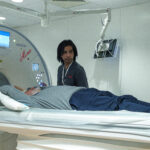
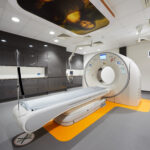
Lung cancer tends to be quiet early on because the deep tissue of the lungs has few nerve endings that register pain, so a small tumour can sit there without causing any discomfort. Symptoms usually begin only once it grows large enough to press on an airway, irritate the lining or change how the lungs work. That delay is exactly what screening is designed to beat, because a low-dose CT scan can see a small cancer on the image long before it would ever announce itself as a symptom.
If You're Being Screened, Don't Rely On It Alone
Screening is a safety net, not a guarantee. A cancer can develop in the wait between two scans , and no scan catches everything. So even if you've had a clear lung health check, the advice doesn't change. If you notice something on the list above, act on it rather than waiting for your next invitation.
When Should You See Your GP?
See a GP if you have any of the main symptoms, or any of the less common ones that have lasted and you can't explain. You don't need to be certain it's serious, and you won't be wasting anyone's time. Most people who get checked are reassured, and the ones who aren't are far better served by an early answer than a late one. If you're coughing up blood, don't wait at all.
Knowing the signs of lung cancer isn't about watching yourself for danger. It's about trusting that when something changes and stays changed, the sensible response is to have it looked at early, while the options are at their widest.
Learn what happens during a Lung Health Check and what to expect from a Lung CT Scan.
Conclusion: Shedding Light on Your Health
Digital X-rays are a remarkable blend of technology and healthcare, offering quick, accurate insights into your body's inner workings. They're vital in diagnosing injuries, monitoring conditions, and guiding treatments—all while keeping you safe with minimal radiation exposure.
Remember, open communication with your healthcare provider is key. Don't hesitate to ask questions or express concerns. After all, your health is a team effort, and you're the most important player.
So the next time you're scheduled for a digital X-ray, you can step into the imaging room with confidence, knowing exactly what's in store. It's not just about seeing your bones—it's about seeing the bigger picture of your well-being.
Resources
- RadiologyInfo.org - Digital Radiography (X-ray)
- Mayo Clinic - X-ray
- American Dental Association - Dental Radiographs (X-rays)
- Centers for Disease Control and Prevention - Radiation and Pregnancy
- U.S. Food & Drug Administration - Reducing Radiation from Medical X-rays
- National Institute of Arthritis and Musculoskeletal and Skin Diseases - Arthritis Imaging Tests
- American Academy of Orthopaedic Surgeons - Imaging and Radiology
- World Health Organization - Ionizing Radiation, Health Effects and Protective Measures
- Johns Hopkins Medicine - X-ray (Radiography)