

Dr. Christian Kleanthous is a qualified GP with expertise in sports medicine, trauma, orthopaedics, and MSK medicine. Holding a Neuroscience degree from UCL, he’s served as a team doctor across various sports, including FA league football and rugby, and has provided medical support at events like the Rio Olympics and London Marathon.
- Dr. Christian Kleanthous
- Dr. Christian Kleanthous

- Dr. Christian Kleanthous

- Dr. Christian Kleanthous

- Dr. Christian Kleanthous




Disclaimer
This article is for informational purposes only and does not substitute professional medical advice. Please consult your doctor or a qualified healthcare provider before making any decisions about your health or starting any new treatments.A letter arrives from your GP inviting you for a lung health assessment. The first thing most people want to know is what they're actually being asked to do. A lung health check usually takes place over the phone and involves answering a series of questions that establish whether your lungs would benefit from a closer look. Most people who have one are reassured by the results. Some others are invited for a scan and a small number find out something early enough to do something about it, which is the whole reason the check exists.
The lung health check is the front door to the NHS Lung Cancer Screening Programme , and it's free. Here's who's invited, what the appointment involves and what happens once it's done:
Who's Invited For A Lung Health Check
You'll be invited if you're aged 55 to 74, registered with a GP surgery and a current or former smoker, and you live in an area where the programme has reached. Lung cancer causes more deaths than any other cancer in the UK, and at an early stage it often gives no warning at all, so the programme starts with the people whose risk is highest by age and smoking history. If you've had a letter, text or phone call, that's why you're on the list. If you gave up years ago and feel fine now, you're still exactly who the check is for.
The rollout is happening region by region and age band by age band, so a missing invitation usually means the programme hasn't reached your area yet rather than anything about you. If you smoked in the past and you're not sure your GP has it on record, it's worth telling them, so you're included when your area comes round.
What Happens At The Appointment
The check itself is a set of questions, not a test you can fail. A nurse or trained healthcare practitioner asks about your general health, your breathing, your smoking history and any symptoms you might have noticed, and they usually take your height and weight. It can be done by phone, online or in person, and takes somewhere between 15 and 45 minutes depending on your programme. You can ask them anything while you're on the call. If you still smoke and want help stopping, they can point you to it there and then.
What Happens After Your Lung Health Check
One of three things follows. If the check suggests your risk is low, you need nothing further. If it picks up something about your breathing or lung health that screening isn't designed for, you may be referred back to your GP to look into it. And if it finds your risk of lung cancer is higher, you'll be offered a low-dose CT scan of your lungs.
Being invited for a scan is common and isn't a cause for alarm. A large share of people who have the check go on to have a scan, and the majority of those scans are clear. The programme is deliberately cautious, because the point is to catch anything at the earliest possible moment.
The Scan, And Where It Happens
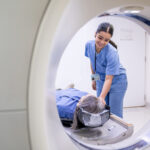
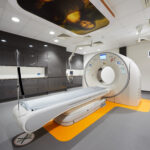
The CT scan is quick and painless. There's nothing to prepare, no fasting and, for screening, no injection. You lie on a bed that moves slowly through a wide ring while the scanner takes a detailed picture of your lungs, and the scan itself lasts only a few minutes.
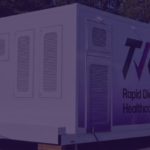
Many scans don't happen in a hospital at all. Low-dose CT units are sited in the community – supermarket car parks, leisure centres, the places you already go – because attendance is highest when screening is close to home. In Norfolk and Waveney, TIC Imaging runs those community scans on behalf of the NHS, parking mobile units in local car parks so a scan means a short trip which can be slotted into your diary rather than a day out. You'll get your results by letter within four weeks.
Why Go If You Feel Healthy?
This is the part that catches people out. Early lung cancer usually has no symptoms at all, so feeling well tells you very little about what a scan would find. The figures make the case better than any argument can. Three-quarters of the lung cancers picked up through the programme have been caught at stage 1 or stage 2, when treatment is most likely to work, and more than 10,000 have been found across England since the programme began. Caught early, lung cancer is often treatable. Caught late, the odds are very different.
There's one exception to all of this. Screening is for people without symptoms. If you already have a cough that won't shift after three weeks, you're coughing up blood, you're breathless or you've lost weight without trying, don't wait for a lung health check – see your GP now.
The letter is easy to put to one side, particularly when nothing hurts and life is busy. It's worth picking back up. A lung health check asks very little of you, and for the people who need it most it gives back the one thing that changes everything in lung cancer, which is time.
You can also learn more about the Signs and Symptoms of Lung Cancer and what to expect during a Lung CT Scan in our related guides.
Conclusion: Shedding Light on Your Health
Digital X-rays are a remarkable blend of technology and healthcare, offering quick, accurate insights into your body's inner workings. They're vital in diagnosing injuries, monitoring conditions, and guiding treatments—all while keeping you safe with minimal radiation exposure.
Remember, open communication with your healthcare provider is key. Don't hesitate to ask questions or express concerns. After all, your health is a team effort, and you're the most important player.
So the next time you're scheduled for a digital X-ray, you can step into the imaging room with confidence, knowing exactly what's in store. It's not just about seeing your bones—it's about seeing the bigger picture of your well-being.
Resources
- RadiologyInfo.org - Digital Radiography (X-ray)
- Mayo Clinic - X-ray
- American Dental Association - Dental Radiographs (X-rays)
- Centers for Disease Control and Prevention - Radiation and Pregnancy
- U.S. Food & Drug Administration - Reducing Radiation from Medical X-rays
- National Institute of Arthritis and Musculoskeletal and Skin Diseases - Arthritis Imaging Tests
- American Academy of Orthopaedic Surgeons - Imaging and Radiology
- World Health Organization - Ionizing Radiation, Health Effects and Protective Measures
- Johns Hopkins Medicine - X-ray (Radiography)