

Dr. Christian Kleanthous is a qualified GP with expertise in sports medicine, trauma, orthopaedics, and MSK medicine. Holding a Neuroscience degree from UCL, he’s served as a team doctor across various sports, including FA league football and rugby, and has provided medical support at events like the Rio Olympics and London Marathon.
- Dr. Christian Kleanthous
- Dr. Christian Kleanthous

- Dr. Christian Kleanthous

- Dr. Christian Kleanthous

- Dr. Christian Kleanthous




Disclaimer
This article is for informational purposes only and does not substitute professional medical advice. Please consult your doctor or a qualified healthcare provider before making any decisions about your health or starting any new treatments.Being invited for a scan after your lung health check is the point where some people start to worry, so it's worth saying up front that the scan itself is the easy part. A Low-Dose CT Scan of your lungs takes only a few minutes, doesn't hurt and asks almost nothing of you. You lie down, the scanner does the work, and often takes less time than it took you to find a parking space.
Here's what actually happens, from the moment you arrive to the letter that follows.
What Is A Low-Dose CT Scan?
A CT scan takes X-ray pictures of your chest from lots of different angles, and a computer builds them into a detailed, three-dimensional picture of your lungs. It shows far more than a standard chest X-ray, which is why it can pick up changes long before you'd notice anything yourself. The low-dose part matters: the scan used for lung screening is set up to use a small amount of radiation, lower than a standard CT scan, because it's designed to be repeated safely over the years of a screening programme.
Is There Anything To Prepare?
Almost nothing. There's no need to fast, nothing to drink and, for a screening scan, no injection. You can eat normally beforehand and take your usual medicines. You'll be asked to remove anything metal from your upper body – a necklace, an underwired bra or keys in a top pocket – because metal shows up on the scan, so it's worth wearing something simple you can slip off easily. That's the extent of it.
What Happens During The CT Scan?
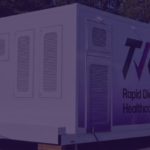
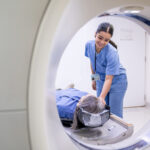
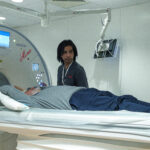
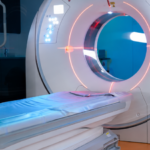
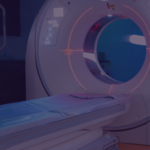
The scan takes place either in a hospital or, increasingly, in a mobile unit parked in your community. You lie on your back on a flat bed. The scanner is a large ring, open at both ends, and the bed moves you slowly through the middle of it, so this isn't the long enclosed tunnel people picture from an MRI. The radiographer operating the scanner steps into the next room, but they can see you, hear you and talk to you the whole time. At one or two points you'll be asked to take a breath in and hold it for a few seconds while the scanner captures a clear picture, because a still chest gives a sharper image. Then you breathe normally again. The scan itself lasts only a few minutes, and the whole appointment is usually done inside half an hour.
Is The Radiation Something To Worry About?
It's a fair question. The amount of radiation from a low-dose lung scan is very small, and the team weighs that against what the scan can do, which is find a lung cancer early enough to treat it. For the people the programme invites, that trade off sits firmly on the side of having the scan. Radiographers ask everyone the same pre-scan questions, including about pregnancy. It rarely changes anything, but it's the kind of thing they'd rather know before you go in.
When Do You Get Your Results, And What Might They Say?
You'll get a letter with your results within four weeks and one of three outcomes will be in it. Most often the scan is clear and you carry on, returning for your next round of screening when it's due. Sometimes the scan shows a small spot on the lung, called a nodule. Most nodules are harmless, but because a few can be an early sign of cancer, you may be asked back for another scan a few months later to check whether it has changed. And occasionally the scan shows something that needs a closer look, and you're referred to a specialist for further tests. Being called back doesn't mean you have cancer. The programme is built to be cautious, and the majority of people who go on for more tests turn out to be fine.
That's the entirety of it. A short appointment, a few minutes lying down, a breath held twice and a letter a few weeks later. For something that can catch the UK's biggest cancer killer at its most treatable, a lung CT scan asks remarkably little of the person having it.
You can also learn more about the Signs And Symptoms Of Lung Cancer and What To Expect During A Lung Health Check in our related guides.
Conclusion: Shedding Light on Your Health
Digital X-rays are a remarkable blend of technology and healthcare, offering quick, accurate insights into your body's inner workings. They're vital in diagnosing injuries, monitoring conditions, and guiding treatments—all while keeping you safe with minimal radiation exposure.
Remember, open communication with your healthcare provider is key. Don't hesitate to ask questions or express concerns. After all, your health is a team effort, and you're the most important player.
So the next time you're scheduled for a digital X-ray, you can step into the imaging room with confidence, knowing exactly what's in store. It's not just about seeing your bones—it's about seeing the bigger picture of your well-being.
Resources
- RadiologyInfo.org - Digital Radiography (X-ray)
- Mayo Clinic - X-ray
- American Dental Association - Dental Radiographs (X-rays)
- Centers for Disease Control and Prevention - Radiation and Pregnancy
- U.S. Food & Drug Administration - Reducing Radiation from Medical X-rays
- National Institute of Arthritis and Musculoskeletal and Skin Diseases - Arthritis Imaging Tests
- American Academy of Orthopaedic Surgeons - Imaging and Radiology
- World Health Organization - Ionizing Radiation, Health Effects and Protective Measures
- Johns Hopkins Medicine - X-ray (Radiography)